
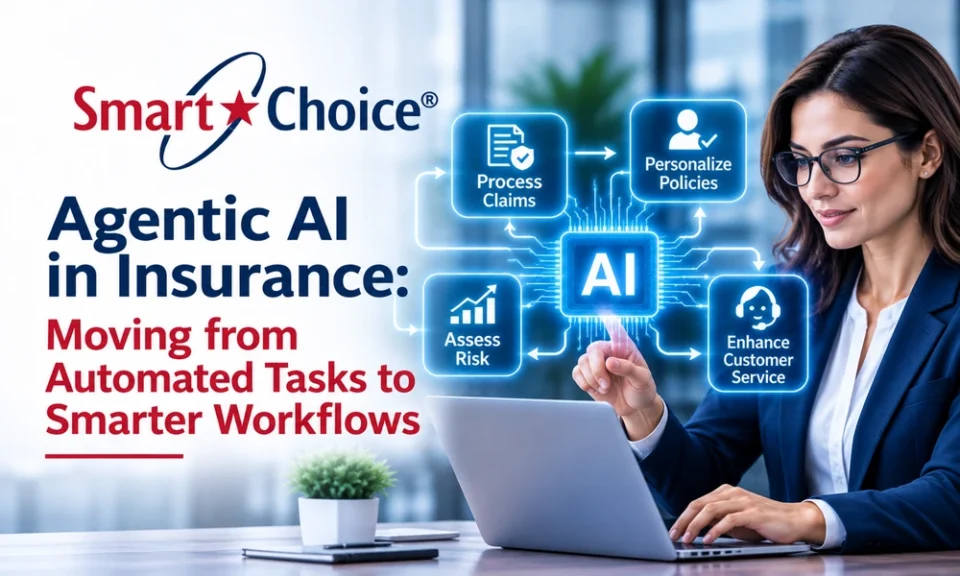
Insurance teams have numerous interrelated processes. A single process such as closing out a claim could involve multiple steps including checking documentation, reviewing policies, screening for fraud and providing updates to customers. Agentic AI in insurance provides a means of automating several of these steps, thus reducing the amount of manual work required to complete them.
Unlike other software which simply provides answers to questions or generates written material, Agentic AI Systems have the capability of developing plans for completing a task, utilizing an approved set of tools and performing specific tasks as long as they are within defined parameters. These characteristics provide insurance companies with the ability to complete tasks faster, yet still include individuals in making critical decisions.
How Agentic AI Works in Insurance
An AI agent will take a user’s objective, break it down into smaller objectives, and perform actions based upon a set of rules and data that is accessible to it. Additionally, an AI agent will assess the outcome of its action and determine what should be done next.
For example, when a claim arrives, an AI agent may:
- Gather the claim form and related policy details.
- Check whether the needed documents are present.
- For a claims handler, it can summarize the information.
- Flag missing details/unusual patterns.
- Draft a message asking the customer for more information.
The system has the ability to handle routine tasks, and it will forward complicated situations to a human specialist.
Four Areas Where AI Agents Can Help
Claims Management
Agents can organize claim files, review documents, and monitor the status of a case. As a result, agents can reduce delays in processing claims, allowing claims departments to devote more time to those cases that require a thorough review.
Customer Service
AI agents will respond to frequently asked questions, offer approved company policy information, and help customers complete basic service functions.
Underwriting Support
Agents may obtain appropriate data, summarize risk details, and assemble files for review by an underwriter. It is important that decision making on issues requiring judgment continue to be done by qualified personnel.
Fraud Detection
AI agents may compare claim details with known risk indicators and signal potential problems to be investigated. Alerts provided by these agents can assist in investigations of claims but cannot establish that a claim was fraudulent.
The Value for Insurance Businesses
Well-designed agentic AI in insurance industry can assist with reducing repetitive tasks, improving response time, and assisting with developing more standardized procedures. In addition, they may allow insurance teams to handle an increasing workload while minimizing additional manual efforts.
Control Is Essential
The development of AI as an agent presents some risks. AI agents who base their decisions upon incorrect data will likely make poor decisions which will affect both customers and insurance companies negatively. Additionally, AI agents may compromise the privacy of customers if they do not sufficiently safeguard customer’s personal data.
Companies must establish clear permission levels, safeguard confidential information, maintain audit trails of all activities performed by agents, and obtain authorization from a person prior to performing any action that has potential to significantly affect the business. Additionally, the reliability of each agent should be tested regularly.
A Human-Led Future
In most cases, the greatest benefits of using agentic AI in insurance are realized when the AI takes care of routine procedures and provides agents/personnel with improved data. The implementation of effective control mechanisms allows insurance providers to develop more effective operational procedures and systems while focusing on the ethical aspects (accountability, fairness) of their business operations and increasing customer trust.
